NADH vs NAD+ forms a central cellular redox pair that stabilizes metabolism, regulates mitochondrial output, and coordinates adaptive responses to energetic stress.
Overview of NADH vs NAD+ in Cellular Metabolism
NADH vs NAD+ defines a reversible coenzyme system essential for metabolic continuity. NAD+ functions as an oxidized cofactor that accepts electrons from substrate oxidation. NADH represents the reduced form that donates electrons to downstream pathways. This exchange supports efficient ATP production and maintains intracellular redox balance.
Because these coenzymes participate in many pathways, the NADH vs NAD+ ratio acts as an integrated metabolic signal. Glycolysis, the tricarboxylic acid cycle, and oxidative phosphorylation all depend on coordinated coenzyme cycling. This regulatory couple therefore links nutrient oxidation with the continuous regeneration of cellular ATP reserves.
Redox Conversion and Electron Transfer Mechanisms
During glycolysis, specific dehydrogenases convert NAD+ to NADH as they oxidize carbon substrates. In the tricarboxylic acid cycle, additional steps generate NADH through controlled oxidation of metabolic intermediates. Mitochondrial complex I then receives electrons from NADH and transfers them into the respiratory chain, supporting oxidative phosphorylation and ATP synthesis.
A high NADH fraction indicates a reduced state that can limit oxidative reactions by reducing the availability of NAD+. A high NAD+ fraction indicates an oxidized state that supports continued substrate oxidation. Therefore, NADH vs NAD+ directly influences electron flow through the respiratory chain and modulates mitochondrial performance.
Redox balance also affects biosynthetic activity. Several anabolic enzymes rely on defined coenzyme ratios to maintain directionality. Disturbance of NADH vs NAD+ may impair lipid synthesis, amino acid turnover, or nucleotide production.
Compartment-Specific NADH and NAD+ Regulation
Cells preserve distinct NADH vs NAD+ ratios in mitochondria, cytosol, and nucleus. Mitochondria maintain an oxidized NAD+ pool that supports oxidative phosphorylation. The cytosol maintains a more balanced ratio that is appropriate for glycolysis, redox buffering, and rapid metabolic switching. The nucleus utilizes NAD+ for sirtuins and PARPs that regulate DNA repair, chromatin structure, and transcriptional programs.
Each compartment adapts its ratio through coenzyme transport or localized enzymatic activity. Mitochondria generate large amounts of NADH during oxidative metabolism. Cytosolic shuttles move reducing equivalents between compartments to maintain balance.
NAD+ Decline During Stress and Aging
NAD+ often decreases during inflammation, oxidative stress, or aging. Reduced NAD+ shifts the NADH vs NAD+ ratio toward a more reduced state. This condition may weaken mitochondrial function and disturb ATP synthesis. Decreased NAD+ also affects pathways regulated by sirtuins, potentially compromising DNA repair and chromatin maintenance.
Stress-induced activation of PARPs can further consume NAD+ and accelerate depletion. Preclinical research indicates that restoring NAD+ levels can stabilize redox conditions and support cellular resilience. These observations support the concept that NAD+ availability is a limiting factor for long term cellular homeostasis. However, controlled human studies remain limited.
Regulation of NAD+ Biosynthesis
NAD+ originates from de novo synthesis using tryptophan or from salvage pathways that recycle vitamin B3 derivatives. The salvage pathway is dominant in most tissues. Nicotinamide converts to NAD+ through enzymatic recycling, which maintains stable NADH vs NAD+ ratios during metabolic fluctuations.
Key enzymes respond to energy demand and nutrient availability. Increased workload accelerates salvage activity to restore NAD+. Balanced recycling preserves redox control and supports mitochondrial efficiency.
Interpretation of NADH vs NAD+ in Applied Contexts
Researchers interpret the NADH vs NAD+ ratio as a functional indicator of cellular redox direction. High NADH suggests reduced oxidative capacity, while high NAD+ suggests readiness for electron acceptance. These shifts provide insight into mitochondrial function and metabolic adaptation under physiological and experimental conditions.
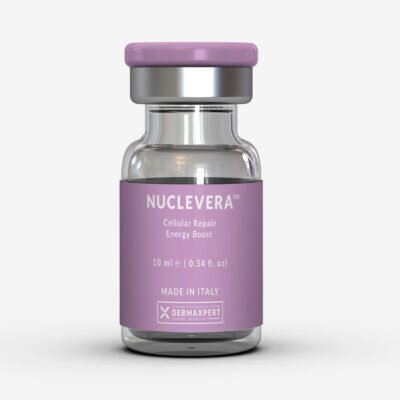
Direct measurement of NAD+ and NADH requires advanced analytical methods. Therefore, interventions that focus on this redox pair should emphasize maintenance of physiological balance. NUCLIVERA is one of our products that contains NADH within a controlled redox-supporting formulation.
Conclusion: A Core Redox Pair in Metabolism
NADH vs NAD+ represents an essential redox pair that coordinates mitochondrial activity, nutrient processing, and genomic regulation. A stable ratio supports cellular integrity and metabolic efficiency across tissues. Future research will clarify how carefully modulated changes in this system influence defined clinical and cosmetic endpoints without disturbing essential biochemical pathways.
FAQ
What defines the NADH vs NAD+ system?
It is a redox pair in which NAD+ accepts electrons and NADH donates them, forming a central control mechanism for many metabolic reactions.
Why is the NADH to NAD+ ratio important?
The ratio influences mitochondrial ATP production, redox balance, and the direction of key metabolic pathways.
Can nutrition affect NAD+ levels?
Vitamin B3 derivatives support NAD+ biosynthesis through salvage pathways and thereby influence coenzyme availability.
Article References
Ying W. NAD+/NADH and NADP+/NADPH in Cellular Functions and Cell Death. Antioxid Redox Signal. 2008. PMC3191039.
scientific publication
Related Products
NUCLIVERA is one of our products that contains NADH within a controlled redox-supporting formulation.