Whitening: 3 Evidence-Based Protocols for Improved Tone and Pigment Balance
Whitening protocols utilize pigment-modulating systems that act on specific biochemical pathways to stabilize melanin activity and support a more even appearance over time.
Whitening Fundamentals and Pigmentation Pathways
Melanin formation follows a controlled biochemical sequence. When melanocytes operate at elevated activity levels, visible darkening becomes more pronounced. Targeted pigment-modulating strategies stabilise these signals and support a more consistent tone.
The epidermis contains most of the visible pigment. For this reason, surface-focused protocols can achieve predictable changes when combined with strict photoprotection. Regulation of tyrosinase, melanosome transport, oxidative stress, and barrier stability plays a central role in tone consistency.
Why Pigment Control Matters for Tone Stability
Irregular pigmentation often develops from cumulative sun exposure, inflammatory reactions, or hormonal influences. Structured tone-balancing routines help limit these drivers. The objective is gradual clarity rather than rapid tone alteration. Consistency, barrier preservation, and UV regulation remain essential throughout the process.
Topical Whitening Serum and Skincare Systems
Topical care forms the foundation of tone-balancing practice. A Whitening serum designed for pigment modulation combines several mechanisms that influence melanin levels at different points in the pathway. This multi-route approach supports measurable, steady adjustments in visible tone.
Key components may include tyrosinase modulators, transfer regulators, antioxidant systems, and hydration complexes. Together, they stabilize melanin formation, limit oxidative stress, and maintain skin clarity.
- Arbutin or kojic acid for enzyme modulation
- Niacinamide and selected peptides for transfer regulation
- Vitamin C derivatives and glutathione for antioxidant support
Clinical data indicate that niacinamide, tranexamic acid, and vitamin C derivatives can support pigment correction when used regularly with appropriate sun protection.
Ingredient Categories Relevant to Pigment Regulation
Tone-balancing formulations often combine ingredients from four mechanistic groups:
- Enzyme regulators: arbutin, kojic acid, ascorbic derivatives
- Transfer modulators: niacinamide, Nonapeptide-1, soy fractions
- Barrier stabilisers: panthenol, allantoin, Centella compounds
- Surface-renewal agents: AHAs, PHAs, low-strength retinol
These groups act on melanin production, movement, oxidative balance, and cellular turnover to support a more uniform tone.
Routine Structure for Effective Tone Management
A consistent routine ensures that pigment pathways remain regulated and that improvements are maintained over time.
Daily Routine
- Gentle cleanser that respects barrier lipids
- Pigment-modulating serum applied to targeted areas
- Moisturiser adapted to barrier needs and skin type
- Broad-spectrum sunscreen to control UV-driven melanin activation
Weekly Support
- One or two mild exfoliation sessions, depending on tolerance
- A radiance-supporting mask formulated for regular use
This rhythm reinforces clarity and reduces the re-accumulation of uneven pigment patterns over several turnover cycles.
Limitations and Safety Considerations
Surface-focused formulas do not target deep dermal pigment deposits. These patterns may require medical evaluation, dermatoscopic assessment, or prescription-based strategies. If irritation or barrier disruption occurs, the routine should be simplified until stability is restored.
Safe practice avoids aggressive peels, unregulated agents, and inconsistent sunscreen use. Long-term tone regulation depends on barrier preservation, realistic expectations, and predictable application patterns.
Who May Benefit from Pigment-Balancing Protocols
These strategies may support individuals with post-inflammatory marks, sun-induced pigmentation, melasma tendencies, or diffuse dullness and uneven tone. Professional assessment helps determine which ingredient combinations and application frequencies are most appropriate for each skin type and condition.
FAQ
What is an effective Whitening routine for uneven tone?
An effective routine combines a pigment-regulating serum, barrier-supporting moisturiser, consistent UV protection, and periodic gentle renewal adapted to individual tolerance.
How long do visible tone changes usually take?
Visible changes typically appear over several epidermal turnover cycles. Many protocols reassess progress after eight to twelve weeks of stable use.
Is pigment-control care suitable for sensitive skin?
Most skin types can follow regulated pigment-control plans when formulas are matched to barrier conditions, introduced gradually, and monitored for tolerance.
Conclusion: Regulated Pigment Management for Balanced Tone
Modern tone-balancing strategies rely on controlled biochemical modulation, supportive active ingredients, and strict photoprotection. This combination promotes gradual clarity while maintaining long-term skin stability and barrier function.
Article References
Improvement of skin whitening agents efficiency through encapsulation: Current state of knowledge (PMID: 28416402)
Related Products
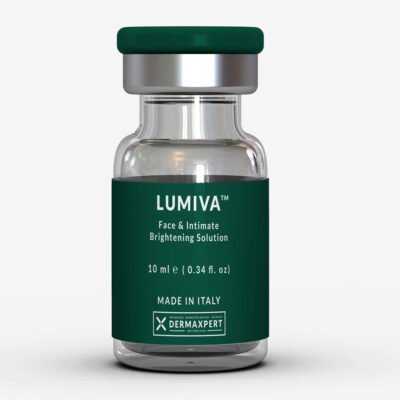
LUMIVA is one of our products that contains NADH within a controlled redox-supporting formulation.